Subscribe
My Account
Basket
Join
Subscribe Today
Why Subscribe?
Check My Subscription
Buy Gift Subscription
Explore
News
All News
Latest Gear
Comps and Events
Flying Culture
Adventure and inspiration
Explore Sites Worldwide
Pilots and profiles
Fly Better
Techniques and Skills
Masterclasses
Weather
Safety
Gear Guide
Design Insights
EN-A Wing Reviews
EN-B Wing Reviews
EN-C Wing Reviews
EN-D/CCC Wing Reviews
Hike&Fly Reviews
Paramotor Gear Reviews
Technology Reviews
Harnesses Reviews
Accessory Reviews
New Pilot's Gear Guide
Magazine
Current Issue
Previous issues
Podcasts
Shop
Shop Home
Accessories
Books
Digital Books
Paraglider Bags
Pilot Wear
Single Issues
Join
Subscribe Today
Why Subscribe?
Check My Subscription
Buy Gift Subscription
Explore
News
All News
Latest Gear
Comps and Events
Flying Culture
Adventure and inspiration
Explore Sites Worldwide
Pilots and profiles
Fly Better
Techniques and Skills
Masterclasses
Weather
Safety
Gear Guide
Design Insights
EN-A Wing Reviews
EN-B Wing Reviews
EN-C Wing Reviews
EN-D/CCC Wing Reviews
Hike&Fly Reviews
Paramotor Gear Reviews
Technology Reviews
Harnesses Reviews
Accessory Reviews
New Pilot's Gear Guide
Magazine
Current Issue
Previous issues
Podcasts
Shop
Shop Home
Accessories
Books
Digital Books
Paraglider Bags
Pilot Wear
Single Issues
Archive: Mar 2005
European Paragliding Championships 2004: Tragedy and triumph
Despite exceptionally good conditions, the eight European Paragliding Championships was marred by yet another tragic accident. Silver medallist Bruce Goldsmith reports
Read More
Bruce Goldsmith’s Icaristics: Flying in the Lee
Every pilot learns at paragliding school not to fly in the lee side. But we do. Bruce Goldsmith takes us on a cautious glide...
Read More
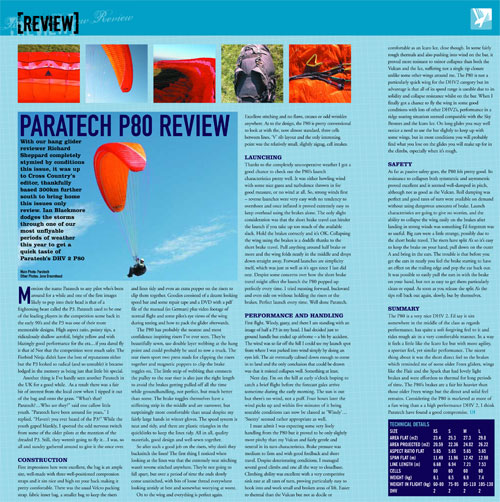
Paraglider review: Paratech P80
Ian Blackmore reviews the latest in a long line of pedigree paraglider wings from Switzerland's Paratech
Read More
Icaristics: The Full Frontal
Bruce Goldsmith brings us up to date on paraglider behaviour during full frontals
Read More
Current Issue
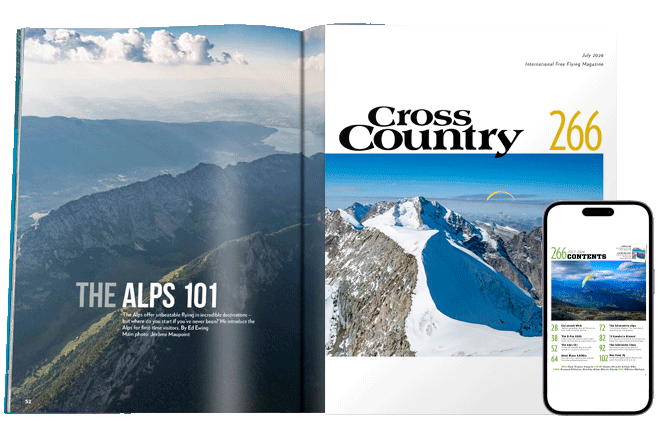
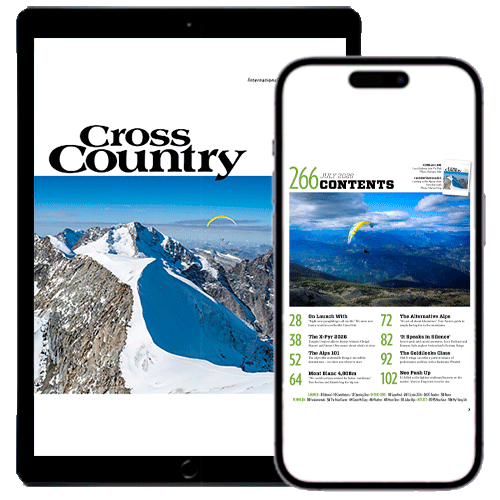
Cross Country 266:
July 2026
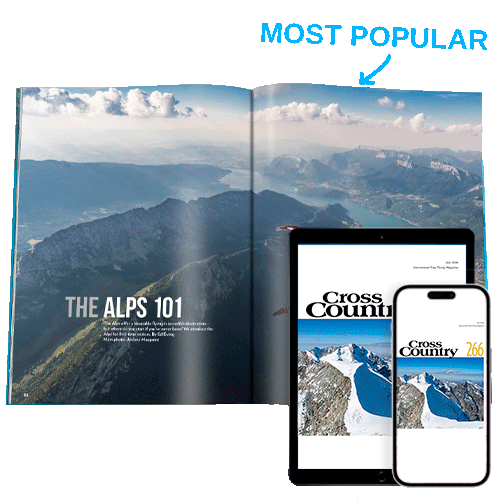
We’ve dedicated this issue to The Alps – that 1,200km arc of mountains that curves through the centre of Europe from Monaco to Slovenia.
Find out more
Subscribe today
Get instant online access to hundreds of articles and Masterclasses
Enjoy eight issues of Cross Country in digital and premium print, or digital only
Learn from the world’s best in six Masterclass Live Sessions
Benefit from exclusive discounts on equipment, books and courses
Gain the chance to win a new wing of your choice, twice a year
Digital
€4.50
Per month
Select
Print & Digital
€8.50
Per month
Select
Get instant online access to hundreds of articles and Masterclasses
Enjoy eight issues of Cross Country in digital and premium print, or digital only
Learn from the world’s best in six Masterclass Live Sessions
Benefit from exclusive discounts on equipment, books and courses
Gain the chance to win a new wing of your choice, twice a year
Digital
€4.50
Per month
Select
Digital & Print
€8.50
Per month
Select
Copyright Cross Country Magazine
Cross Country International Ltd, Tollgate, Beddingham, Near Lewes, East Sussex BN8 6JZ UK Tel: +44 (0)1273 256 090