ICARISTICS: A STORM RIDER’S GUIDE TO SURVIVAL
Bruce Goldsmith relates a recent close encounter with a Cu Nim and looks at how best to avoid the dangers of thunderclouds

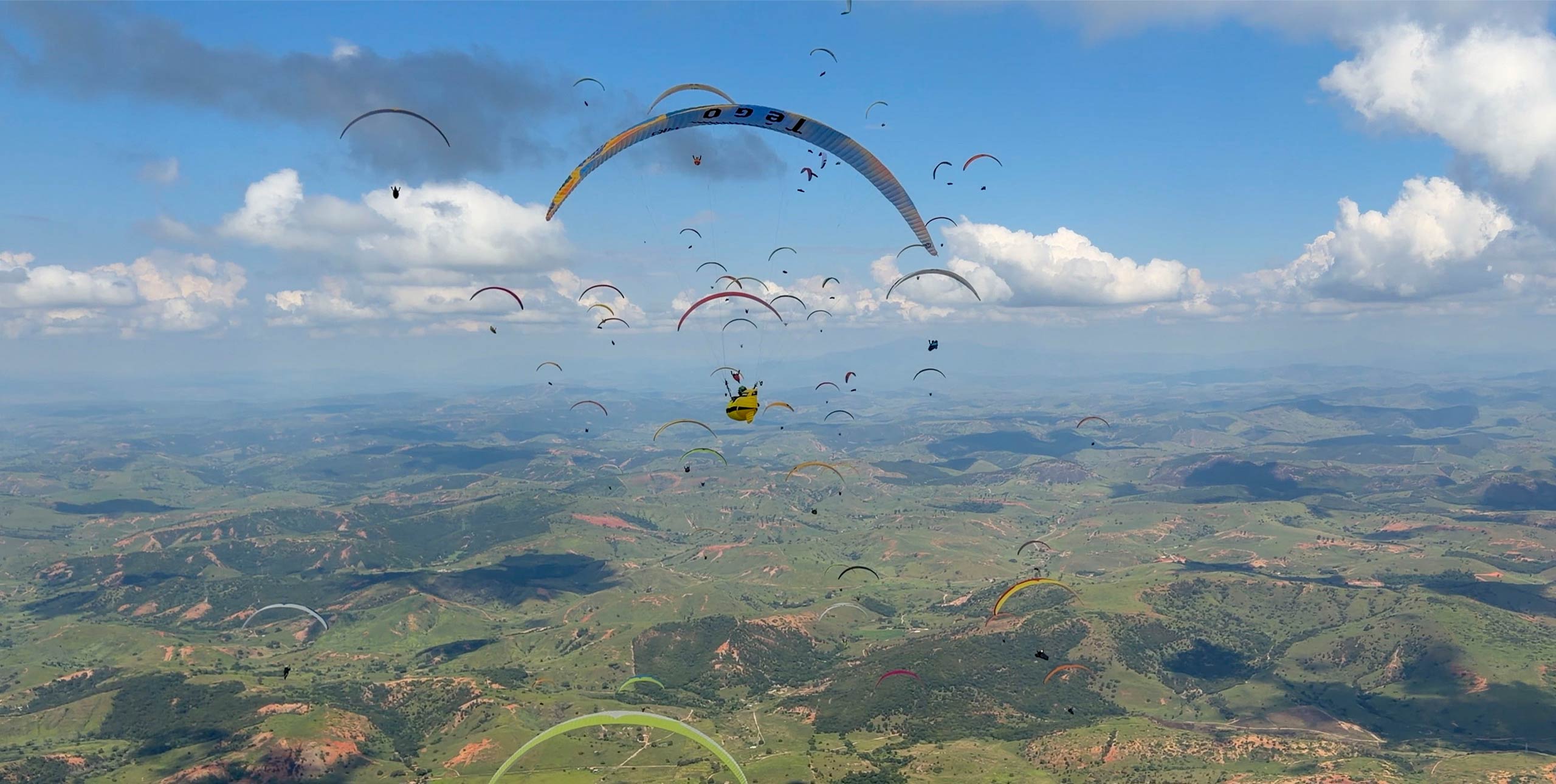
DURING ONE of the practice days at the recent World Championships in Brazil, myself, Xevi Bonet from Spain, and Americo de Souza from Portugal had to outrun a thunderstorm. It was a pretty exciting experience, almost a bit too exciting for comfort to be honest, but it got me thinking that an analysis of how I was assessing my situation that day could make a useful insight into how to or even how not to fly in thunderstorms. First, why are thunderstorms dangerous?
1 Gust fronts: Gust fronts are downdrafts of cold air that are pushed out in front of the thunderstorm. Normally they are quite visible. Gust fronts are only really dangerous when you are on or near the ground, where sudden high winds could cause you to crash or be blown into obstacles. Gust fronts can’t really hurt you in the air, so the most important thing to remember is to avoid landing as a gust front comes though.
2 Strong lift: Thunderstorms can produce very strong lift that can suck you up to such high altitudes that you could pass out or even freeze to death. There can also be extreme turbulence inside a thunderstorm; gusts of up to 300 km/h have been recorded within powerful Cu Nims! Even 747’s avoid flying into thunderstorm heads as the forces within have allegedly broken the wings off aeroplanes in the past, so they’re pretty powerful things.
3 Planning: If in doubt, don’t fly. This almost goes without saying of course, but on the day in question I nearly got caught out as things developed faster than I’d expected. The forecast gave a possibility of thunderstorms, but this was nothing new, most days in Valadares we had a forecast for thunderstorms and we all flew, cautiously, and the storms never arrived.
But on this day, even before launching, I could see an area of strong rain clouds 10 km NW from launch. The cloud showed a lot of strong vertical development and rain beneath it, but there had been no thunder; there was no anvil towering above and still no gust fronts.
Over the previous days we’d seen lots of similar clouds, and they nearly always developed into large clouds whose own shadow cut off the sunlight and hence the convection to them; these cloud normally died out in half an hour or so. However, this cloud had other ideas…
Read more: The full story appeared in Edition 99
• Got news? Send it to us at news@xccontent.local
Subscribe to the world’s favourite hang gliding and paragliding magazine