PMA call for Class 6: a new class of paraglider
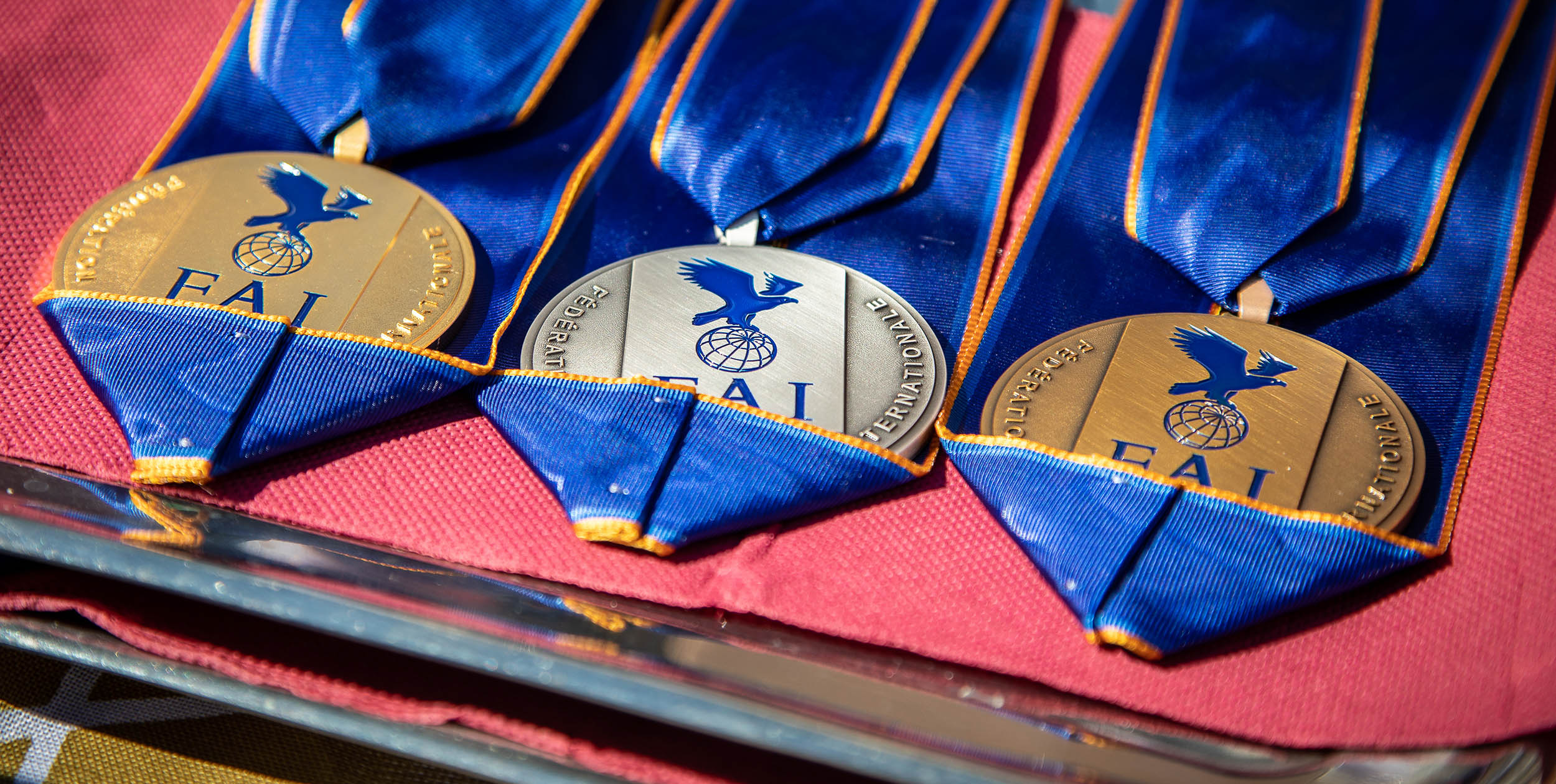
Paragliding Manufacturers’ Association members have voted to ask the world governing body of hang gliding and paragliding, the FAI, to redefine the Class 3 paraglider and create a new class of paraglider, Class 6.
If the PMA’s request is implemented it means that the Ozone BBHPP paraglider that brought the Anglo-French manufacturer a 1-2 victory at the Paragliding World Cup Superfinal in September would be excluded as it uses carbon rod reinforcing technology and only two sets of lines.
Ozone are reportedly upset by the decision as the now well-established plastic wire reinforcements seen on many gliders will be included in the PMA proposed Class 3, while their carbon rods of almost equal diameter will see the BBHPP pushed into the proposed new Class 6.
In response Swiss manufacturer Advance said it would restrict its comp gliders to its own test pilots and factory team because of the “uncertain” way competition is developing.
Advance said it was restricting its comp gliders to members of its own competition team, and its own test pilots, because, “not enough is known about the risks and extreme flight behaviour of paragliders with rigid primary structures”.
Read the full story with comment from the major players in the industry in the forthcoming issue of Cross Country magazine.
• Got news? Send it to us at news@xcmag.com. Fair use applies to this article: if you reproduce it online, please credit correctly and link to www.xcmag.com or the original article. No reproduction in print. Copyright remains with Cross Country magazine. Thanks!
Subscribe to the world’s favourite hang gliding and paragliding magazine

Related posts:
- ‘Go Serial Class’ say Paraglider Manufacturers Association Paragliding competitions could be revolutionised following the decision of the Paraglider Manufacturers Association to support Serial Class for FAI Cat...
- PMA prints frequently asked questions relating to the FAI paraglider class debate The Paraglider Manufacturers' Association has printed answers to some frequently asked questions relating to the FAI paraglider class debate, on...
- Advance Omega 8 serial class paraglider almost ready The long wait for Advance's new high-performance paraglider, the Omega 8, is almost over. There will be four sizes, which...
- Airwave Cobra sports class paraglider certified Airwave’s Cobra, replacement for the Mustang 2, has now been certified EN C and LTF 2 in the S size,...
- Airwave FR5 open class competition paraglider Airwave's FR5 is the latest in their FR range of open class competition paragliders. They say it is "a real...
- Gradient Avax XC3 serial class paraglider Gradient's new high performance paraglider, the Avax XC3, has passed EN D certification in size 28, and is now for...
- Ozone R10 open class competition paraglider Ozone have released the new Mantra R10 Open Class competition paraglider. Carbon free, it is available in either a 2-line...
- Sol Synergy 4 sports class paraglider Sol's new sports paraglider, the Synergy 4, is certified EN C in M and L sizes, with S and XL...


December 16th, 2009 at 2:26 pm
This is probably a bordering on being worthy the paragliding forum’s Pedant and Nitpicker’s Corner: The \governing body of hang gliding and paragliding\ is not, as mentioned in this article, the FAI (International Aeronautic Federation), but CIVL which is the FAI’s hang gliding and paragliding commission. It is my understanding that the PMA’s recommendation went to CIVL, not the FAI.
December 24th, 2009 at 10:13 am
Further to this, the PMA have issued a press release.
December 27th, 2009 at 8:23 pm
“not enough is known about the risks and extreme flight behaviour of paragliders with rigid primary structures”.
How can XC magazine reprint this statement without so much as a comment about it? This is obviously false (these carbon battens do not represent a r”igid primary structure” as that term is used in the FAI/CIVL class definitions.
Advance is using this term for propaganda purposes and you should call them out on it, as I have done here.
I see that the PMA has entered this propaganda game also.
December 28th, 2009 at 9:40 am
Totally absurd. The carbon rods are just plastic (resin) reinforced with a little carbon. Still totally flexible. Flexible is flexible, and rigid is rigid. End of argument. Does this mean any manufacturer who comes up with a better idea will risk reclassification of their glider if it works too well?
January 2nd, 2010 at 7:22 pm
Posted on the Ozreport and the paraglider forum, might as well post it here too.
The PMA is acting like a bunch of bureaucrats, or whiny babies. If they succeed, Advance and who ever is promoting this class 6 agenda will succeed in stifling innovation in exchange for what? money, it’s all about money and pride, they can’t accept they got their asses handed to them in competition, and rather than man up to it, and make a better product, they make rules to protect their market share in comp. wings. Seriously, this has got to be a pride issue, since there is almost no profit margin in competition paraglider manufacture.
Aircross made 8 aspect wings without stiff inserts years ago, there’s no reason any of the whiny baby manufacturers can’t come up with a design to compete with the BBHPPP.
January 4th, 2010 at 1:12 pm
[...] reported last month that Paraglider Manufacturers’ Association, PMA, had called into question whether [...]
January 10th, 2010 at 11:35 am
It would be a shame if further development stops. If you can fold, pack and handle the glider as any other glider, what is the problem?
Let’s take a good look at it before condemning it to the back benches.
January 11th, 2010 at 9:58 am
The expression ‘rigid primary structure’ was introduced by CIVL to exclude what Dennis Pagen described at the time as ‘mules’ – essentially hang glider wings from which the pilots hung on long lines. The Ozone carbon wires are not related to any such development and appear to me to just as legitimate as Mylar reinforcement, about which there has been no complaint.
It may be that the two-lineset carbon-reinforced paraglider will turn out to be as great a step forward as the floating double surfaced ‘Comet’ hang glider was back in 1979. No-one knows yet, but we should be allowed to find out before it is banned or marginalised.
January 23rd, 2010 at 8:08 am
The arguments against Ozone’s innovative carbon rod design by certain members of the PMA are obviously self serving. Honest testing is the only way to determine if carbon rods are unsafe. If a wing folds up and fits in a backpack then it must be flexible (sure looked like it did that in the video) and we don’t need an arbitrary 1cm rule. If the carbon technology is impractical (can’t be packed in a backpack, too costly, or too fragile) then it will die on its own and the manufacturer will take the hit from the buyers. There is no good reason to push this new technology out of Class 3.
These naysayers remind me of the 1983 America’s Cup when Dennis Conner accused the Aussies of cheating. They were the first to use a fiberglass hull. It was a huge technological change, now all the hulls are carbon fiber.
If carbon rods can give all us pilots safer and better performing gliders then they should be embraced. This should be about what is best for the flying community, not the protection of certain manufactures. I can understand why the other manufactures are cowering behind a technicality, after all the BBHPP not just beat their best, but smashed them. “Keep moving forward!”
January 25th, 2010 at 7:28 pm
It is sad to see and hear of industry designers crying wolf just to preserve their own interests, especially when they already employ rigid systems in their own designs. Ultimately what I want is the best & highest performing glider I can buy. Do not eliminate my options just because of some rule you make up to control the comp crowd. It is a very bad & sad day when PG designs become limited just to keep competitors on similar performing equipment. If that is the way you want it, then just force comps to all fly the same ship (size, color, weight, harness, helmet…) By choosing to restrict the use of carbon in designs we will be shooting ourselves in the foot to preserve NOTHING! I look to our industry leaders to protect pilots interests and what pilots want is better and better designs. Now what we are seeing in the corruption & perversion of our governing entities, China censors the internet to control the masses, is that what we can expect of FAI? it appears that only those focused on who wins the comps care about the new design being so much better then the rest. I say to all those out there stifling the advancement of our sport and the designs of our equipment, GO TO HELL! I want a BBHPP just so I can fly farther & faster. But you all just don’t want to lose again to any pilot on an OZONE wing. To the FAI, please do not restrict the advancement of paraglider designs just to appease a bunch of race pilots who hate to lose. Right now it is obvious that OZONE has tapped the next level of performance. All the other designers will catch up, but not this year. Just the thought of our governing organization restricting and limiting designs makes me want to never compete again. Thank You OZONE for being visionaries and for pioneering the new design. I pray that the rest of the losers will grow up and choose to embrace advancing changes that benefit us all.
January 27th, 2010 at 2:51 pm
This is absolutely ridiculous. I (and I imagine the vast majority of recreational pilots) couldn’t give a damn about whether some re-inforcement bends around a 1cm or 10cm radius. We want the best performing, safest and lightest machine that will fit inside a backpack.
Innovations like these carbon rods are exactly what our sport needs to keep closing the performance gap between us and our hang gliding brethren.
To make this new class and effectively stifle the development of this and possibly other great technological improvements would be a very sad thing for our sport.
Furthermore, it is unfair to suddenly draw the line at a 1 cm radius bend, when the new technology clearly has better performance and no safety issues have as yet been discovered. Now that the rigidity argument is suddenly being waged, let’s base the decisions on real facts and research instead of pride.
Manufacturers grow up! FAI, please don’t create a new class for this technology as a knee jerk reaction because some manufacturers just got their arses kicked. I believe before you do something this radical and effect the future of our sport, more research and rational consideration needs to be sought. What’s your reason for not making the ‘rigid limit’ a 5cm bend?
February 2nd, 2010 at 1:12 pm
To debate whether or not the carbon rods in question are “too rigid” is rather silly, in light of the definition of rigid. The carbon rods are actually extremely flexible, not even approaching the stiffness of typical battens used in hang glider sails. And these rather stiff battens would still be defined as flexible, not rigid. As I understand it, the rigid primary structure referred to in the FAI definition of a hang glider is the RIGID aluminum alloy or carbon fiber framework.
Thank you FAI board members for carefully considering this important issue, and acting in the best interest of the future of free flight.
February 10th, 2010 at 5:34 pm
[...] XCmag: PMA calls for Class 6 [...]
February 12th, 2010 at 9:11 am
Such an interesting debate.
I was thinking a little while back and wondering if PG development would ever catch up with HG wings and it seems that for a few years now the increases in performance have been small….in fact almost ceasing.
I read last night that with this new carbon technology that wings with a glide ratio of 15:1 are very possible.
Now I think that when the ozone bbhpp goes on to break the PG distance record then we will see more pilots moving in that direction.
Even the comp pilots will be flying their boomerangs or omegas etc and will look up, high in the sky as they are being overtaken and want to be there.
PMA….dont stiffle development…..embrace it. See where it can take us. Watch other manufacturers take up the carbon rod development too.
Remember, most of us fly paragliding canopies, because we dont want to be flying hanggliders. And we all want to be flying further and higher.
February 16th, 2010 at 4:00 am
Remember back in the early 1990′s, when the Falhawk Athlete had short fibreglass ribs along the line of the “A Lines” to the LE opening. This gave better profile support when most of the other gliders weren’t even using mylar reinforcements. They were about 20 cm long, with a 6 m/m diameter and not very flexible.
This was discontinued as the “rigid structure” often became trapped in the lines or cravated after an asymmetric collapse.
The PMA claim, that these carbon rods form a “rigid primary structure” is a red herring. If the BBHP had “preformed” carbon ribs, it might be the case, but the fact that these carbon rods, just like the plastic “RidgiFoil” only follow the profile of the wing and are flexible, totally counters their argument.
If it maintains it’s shape, due to forward flight and internal pressure, it’s still an “aerodyne”, which is the technical term for a paraglider.
All the carbon ribs do is spring outwards, which gives extra tension to the wing profile, giving it its increased stability and collapse resistance. Also extending the carbon rib along the lower surface allows for the reduction in line attachment points.
Also the PMA 1 cm bend radius is a bit of a furphy as well, during any flight manoeuvre, or mishap, can the PMA demonstrate that a RigiFoiled profile, would distort or contort to this 1 cm claimed bend radius? Where do you get these figures?
Come on PMA, don’t stifle the development of our sport…