Cross Country magazine is off to Lausanne to attend CIVL’s annual meeting, where they will be discussing the future of paraglider design, safety and other subjects of interest to all pilots. If you want to ask CIVL a question, post it below and we’ll do our best to get it to the right person
The governing body of competition paragliding, the Commission Internationale de Vol Libre, otherwise known as CIVL, meets next week to discuss, among other things, whether or not to allow carbon technology in paragliders in competition.
The debate has been a rough one so far. After winning the Paragliding World Cup Superfinal in September 2009 with its BBHPP, Ozone revealed their winning paraglider uses flexible carbon rods chordwise across the glider. The result is a wing that glides better than anything else.
The Paraglider Manufacturers Association (PMA), which represents 28 manufacturers (lots but not all of the industry), cried foul, and argued that the carbon rods meant the BBHPP was not a paraglider as we know it, but a different type of glider altogether.
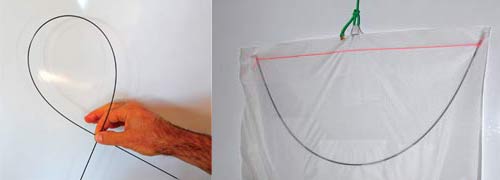
They want gliders that use this type of carbon technology – or any similar stiffening techniques where the reinforcement can’t be wrapped around a marker pen – to be given a new class: Class 6.
The debate went public almost immediately. Ozone argued that the comp-winning technology would ripple out to create better performing paragliders in all classes, not just at the highest level of performance. The prospect of a safe, recreational paraglider with a glide ratio of 15 to 1 was floated.
But, they said, if carbon technology was not allowed in international, CIVL-sanctioned competition (from Cat 2 competitions to the World Championships), then the technology would not be explored fully. The result: a possible big leap in performance all round would be stopped in its tracks.
The PMA argued carbon technology was untested, possibly unsafe, and no one knew what lay down that road.
Rightly or wrongly pilots around the world saw the PMA’s stance as anti-competitive and self serving. A case of sour grapes on behalf of manufacturers who had just seen a fairly level playing field tilted out of favour.
The response was swift: Ozone took out adverts in every paragliding magazine to defend its technology; debate on the forums turned against the PMA; the PMA seemed to score own goals every time it tried to defend itself; magazines like Cross Country discussed it at length.
To read more about the backstory behind this, take a look at:
- The PMA discussion about the definition of a paraglider (a technical web page)
- Ozone’s position (a typically natty video)
- And the current debate on paraglidingforum.com (including contributions by the PMA and the several paraglider designers): Ozone performance, BBHPP and response to the PMA
- Cross Country mag’s Redefining the Paraglider (subscription needed)
If you are still with us, good. Here comes the new bit.
CIVL, that’s the body that regulates paragliding and hang gliding competition and world records, meets in Lausanne, Switzerland, from 18 – 21 February 2010 for its annual meeting. One of the topics up for discussion will be, in essence, this very issue – to allow carbon or not to allow carbon.
CIVL is funded by fees from competitions, and its officials are all pretty-much volunteers. They do a lot of unseen work to help and promote the sport that is never seen, talked about, or widely appreciated.
This time, it’s different. The paragliding world will be watching closely not only what decision CIVL makes, but how it makes it and who makes it.
CIVL has various subcommittees: safety, aerobatics, records, scoring, environmental affairs, sporting code etc, and of course hang gliding and paragliding.
The paragliding subcommittee will meet on 18 and 19 February to discuss this year’s agenda. They will then present their proposals to the rest of CIVL for voting on 20 and 21 February.
It promises to be a long and complex few days. The paragliding subcommittee, chaired by Chris ‘Calvo’ Burns, has 17 main items to discuss, each with several subpoints.
The debate about the definition of a paraglider is being put forward by the Swiss, who have agreed to do it on behalf of the PMA. This doesn’t mean the Swiss agree with the PMA it just means they’re being helpful. In fact the Swiss, whose official CIVL delegate is world-class comp pilot Martin Scheel, are “strongly against” the introduction of a new class of paraglider – they say so in their proposal.
The ‘Swiss Proposal’ will be debated on Friday morning. It will then go to the main CIVL meeting for voting on Sunday. By Sunday evening, there should be an official decision.
If you want to review the CIVL agenda yourself, it’s available here: CIVL Plenary Agenda, 20 and 21 February
The Swiss Proposal is in Annex 16 – it’s remarkably short at only 224 words long. The Paragliding subcommittee agenda is Annex 4 – it’s pretty long. You get the picture.
So, the point of all this is that Cross Country magazine plans to be there on Saturday and Sunday to listen to the main debate, watch the voting, and to speak directly to the people involved in making the decisions.
There is a lot more than the carbon debate being discussed – the whole safety debate that surrounded the 2009 World Championships is heading the agenda. The results from that will be crucial too: some observers predict Open Class gliders will be banned from CIVL comps. Helmets are being discussed. GPS and altitude too.
What we’d like is your help. Let us know what questions you’d like to ask CIVL by posting below and we’ll try and get them to the right people. We’ll be reporting on xccontent.local over the weekend of 20-21 February, and of course in the next issue of Cross Country magazine.
We’re looking forward to hearing what you have to say.

Links
Who’s who on the paragliding subcommittee