Subscribe to Cross Country
HOME//NEWS//ARTICLES//BLOGS//THIS ISSUE//XC Competitions//SUBSCRIBE//THE SHOP//CONTACT US

Parahawking in Nepal under threat

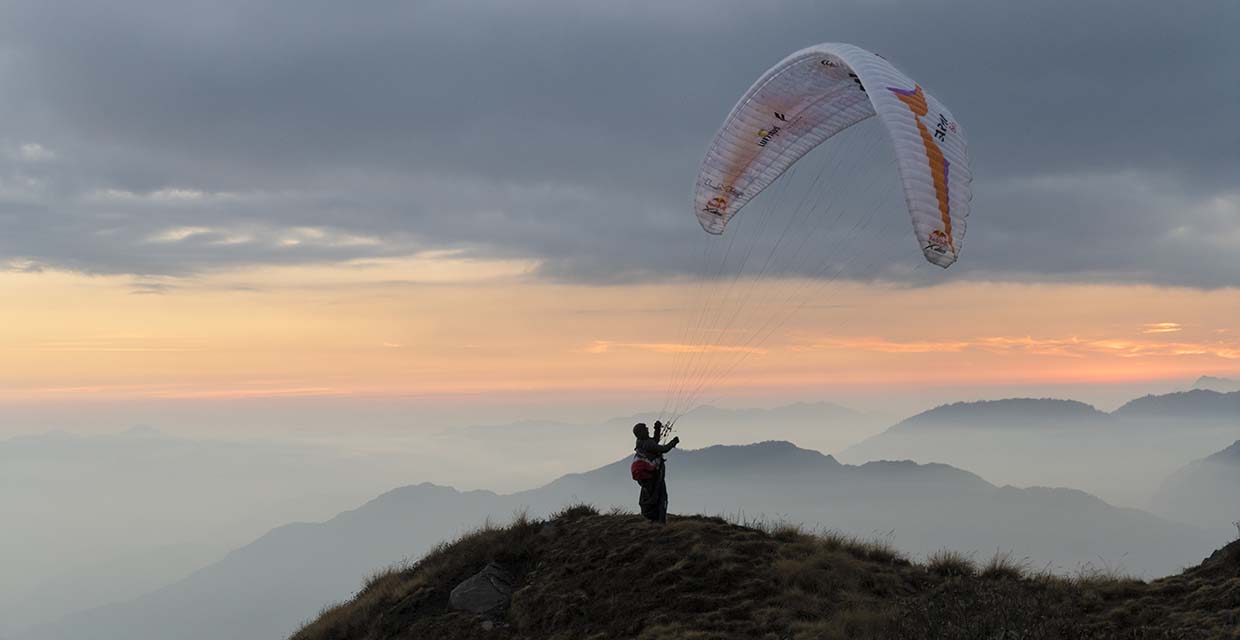
Parahawking in Nepal. Photo: parahawking.com

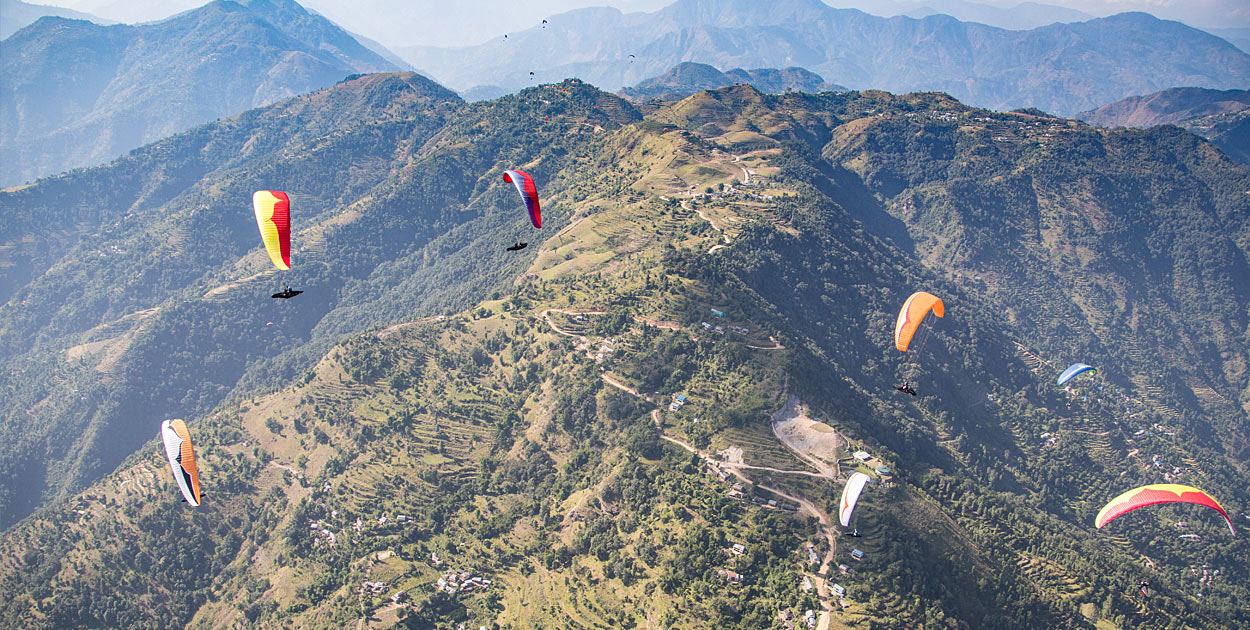
Parahawking in Nepal. Photo: parahawking.com

Scott Mason is standing firm in the face of a sustained local media campaign against his parahawking centre in Pokhara, Nepal.

According to a news report in the London Evening Standard on 17 February, the centre faces closure.

The Evening Standard reported: ‘The Nepalese government has announced that the Himalayan Raptor Rescue Centre in Pokhara is to be closed following allegations that it was illegally holding endangered birds and that the parahawking amounted to cruelty.’

However, Scott corrected the news report via his Facebook site, saying: “Please note, we are not ‘grounded’ as reported in the Evening Standard. We are still going strong and will deal with any problems that come our way through the correct channels.

“The best way to keep supporting us and vulture conservation is to continue to fly with us, that way we can raise more money to save the vultures.”


Parahawking in Nepal

Scott’s centre has been subject to a month-long campaign by a Nepalese newspaper to shut down Scott’s operation. The ‘Mason Must Go!’ campaign claimed Scott was illegally holding endangered species in his rescue centre.

However, Bird Conservation Nepal, a local conservation group, has backed Scott. Chief executive Hum Guring said: “The work of the Himalayan Raptor Centre is much appreciated and is also an important source of income for sustaining the rescue works and to support vulture conservation in Nepal.”

Scott has operated in Nepal for a decade and has given tandem parahawking flights to hundreds of tourists. Alongside the tandem operation he runs a rescue centre for vultures and birds of prey.

Know more? Post below


• Got news? Send it to us at news@xcmag.com.

Subscribe to the world’s favourite hang gliding and paragliding magazine

Home

Related posts:

Clip to Evernote

Tags: ,

8 Comments to “Parahawking in Nepal under threat”

  1. Albaro Araujo Says:

    Dear paragliders and nature lovers,

    This is an interesting subject that must be looked with an open and respectful mind. I have the opportunity to share both activities, paragliding and birdwatching mainly in Venezuela. In my opinion, it is ok to rehabilitate an injured bird back into nature but for sure, I do not support holding (finding, capturing, trainning) birds for different purposes other than preservation. We, here in the andes sometimes are attacked by a large Black and Chestnut Eagle (Oroaetus Isidoris) and black vultures show us the way to the thermals but in general no one has the idea to hold any of these marvelous birds for entertaining or bussines purposes. I know that parahawking seems to be an impressive combination of both paragliding and falconary, but, wild animals must be left on their own into the nature. If not, imagine what would happen if most paragliders were able to have a flying bird companion.

    Saludos amigos,
    Albaro Araujo
    http://www.venadventure.com

  2. not given Says:

    I have a feeling this is much more about tourists arriving in Pokhara and asking for para-hawking tandem flights much to the dismay of the other tandem flight operators……. idle speculation but have heard of people being told there is no parahawking in town….

  3. Peter Claghorn Says:

    Hello Everyone,

    This is a public reply more to Albaro Araujo comment than specifically to the article on Parahawking itself. I appreciated the intention of your note Albaro. Its hard to argue with your commitment to wild animals being left to be wild. However, your note may leave, perhaps inadvertently, readers with a couple of impressions which need to explored.

    The first impression left is that the parahawking centre in Nepal goes out to “find, capture, and train” birds for parahawking. This is not the case. The vultures used for parahawking came already too habituated to humans to be successfully reintroduced to the wild. These birds would be dead in a week if released. The centre does rehabilitate and release birds where this approach can be successful. I have met some of the releasees.

    The second impression is that commercial parahawking is some slippery slope where “most paragliders” would move toward flying with a bird companion. This outcome will only be achieved when the notoriously thrifty and freedom loving paraglider pilot commits to: 1. Building several years of understanding of raptor biology, behaviour and veterinary issues, 2. Purchasing the land and facilities necessary for the year round care and feeding of these birds in a suitable climate 3. Complying with all pertinent regulatory requirements of their geography, 4. Sourcing and training over months an appropriate flying companion who is the right size, species and temperament for flying and who would be successful with other wild birds in your target flying area, 5. Weighing the bird to the gram, daily, and precisely feeding feeding them a balanced diet equivalent to what would be available to them in the wild to ensure the health and flying ability of their new friend. 6, Providing daily flying exercise to assure bird condition, 7. Finding a minimum of 2 other people with advanced raptor handling skills and radios to be a release person at the top and a gather person at the LZ, who want to give up their time every time you want to go flying, and finally 8. Restricting their flying to a very narrow range of geography with flight length limited to the capacity of the birds energy, health and motivation, I am not too worried, given these requirements, that “most pilots” will run right out and begin private parahawking.

    I feel privileged to have experienced a couple of short flights with Bob the vulture in Pokhara. I am happy to know that Bob has materially contributed to beginning to turn around the extinction of his fellow vultures in Nepal and to the outcomes you have espoused, Albaro, the preservation of wild birds living wild in abundance. My hat is off to Scott and the gang at Maya Devi for their work advancing that exact agenda.

    Respectfully

    Peter Claghorn

  4. christina ammon Says:

    Thank you Peter Claghorn for articulating that so well. That was exactly my reaction, and I feel like you just saved a half hour of my time.

    christina

  5. Amanda Says:

    I had been in Nepal using the services of Scott Mason. It is unethical behavior hide the intentions of a profit organization “Parahawking” and “Maya Devi Village” as the one Scott Mason is running and fade his company in the clouds of an organization called “Himalayan Raptor Rescue” a non profit organization supposedly helping the birds of prey , It is inaceptable to run a business and use the good faith of the people who are paying for a resort services and parahawking and giving donations for people who manage a business at the same time that they say “we are helping the birds” without the supervision of any serious Goverment Authority, where the most of the payments are made in cash and the tax evasion to the goverment of Nepal and the people have been serious since the creation of this “company”. including the hostel and the excursions, no track of the founds that he has been put in his pocket and no real bird rescue documented as should be as they do not have the presence of any veterinarian in the place. This only part of the marketing campaing to support his activities. I am sure he is the inventor of the sport but also I am sure that the organization is a scheme to attract tourists as a basis of his lucrative business, touching with this the heart of the people and their money too. I hope that a real organization can help the people of Nepal to end with the abuse to their resources with activities like the one Scott Mason is running abusing of the good faith of the international community.

  6. Ed Ewing Says:

    The debate rolls on in Nepal:

    http://www.myrepublica.com/portal/index.php?action=news_details&news_id=15542

    JEFF GREENWALD in MyRepublica.com writes:

    \Mason is not exploiting Himalayan vultures; he is saving them from extinction. Mason has continually supported international efforts to bring international attention and aid to the plight of these birds – including a project, with Bird Conservation Nepal, to launch a “Vulture Restaurant” in Pokhara which will help fund further raptor rescue efforts.

    \Without these efforts, and the facilities that Mason has developed, rescued vultures would likely share the fate of my Tibetan snow leopard.

    \The most sensible course from here would be to accord Mason the well-deserved status of an exemplary conservator and teacher, fully empowering him to work with local authorities and students to publicize the plight of the raptors. He deserves not censure, but the full support of Nepal’s people and government.\

  7. Veronica Dubak Says:

    Having done parahawking with Peter Claghorn (who’s excellent and accurate comments are posted above), I was equally impressed with Scott’s setup and I also fully support parahawking in Nepal.

    I agree with Peter’s statements above regarding supposed animal exploitation. It’s true that parahawking is a business but the assumption that a profitable business and a charitable organization cannot walk hand in hand is wrong. When I paid for my day of parahawking, I didn’t think twice about whether Scott was pocketing the money he “supposedly” donates to the vulture conservation fund or to even question the authenticity of the Himalayan Raptor Rescue. I think he’s smart enough not to and well intentioned enough never to consider the idea. His passion for birds is very evident and why he would ever even consider jeopardizing his business with an illegitimate charity is beyond me and not something I believe for a second.

    Parahawking was a fantastic experience, and I would recommend it to every and any paragliding pilot. Having it come under threat from the Nepali government is ridiculous because the Nepali government in itself is a complete joke. I have never visited a country quite like Nepal, and quite frankly, I hope not to again. I admire Scott and his team for setting up such a unique operation in such a country and I truly hope that they win this battle. It will truly be a sad day for paragliding if they do not.

  8. Mark Says:

    Even if he was pocketing all of the money, he is enhancing the lives of birds which cannot be released into back into the wild and would otherwise be euphanised, or kept in a small avairy for the rest of their lives. He is also giving people a unique opportunity to have a close encounter with birds in flight. This is not about the birds, it is about jealousy.

Leave a Comment